TL;DR / Answer Box Doubt is not named as a sin in Scripture. Jesus met Thomas's doubt with his wounds, not a rebuke. Habakkuk questioned God and received an answer. "I believe; help my unbelief" (Mark 9:24) is a prayer that named doubt and was immediately heard. The Bible's instruction for how to treat doubters is not condemnation — it is mercy (Jude 22).
The second Sunday after the Resurrection, Jesus came back.
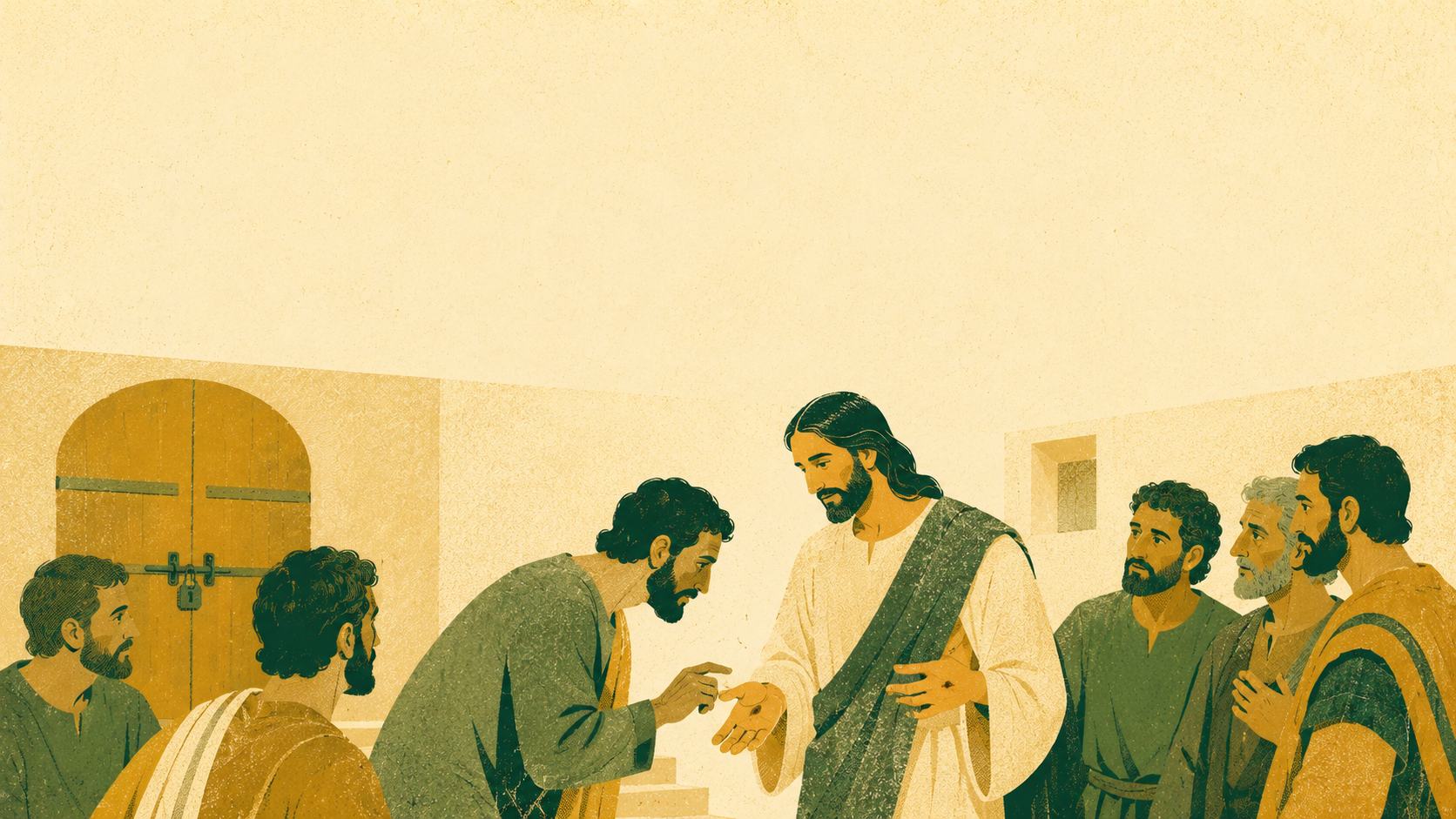
The disciples were gathered behind locked doors again. Thomas had been absent the first Sunday — the Sunday when Jesus appeared, when the others saw the wounds and believed. Thomas had heard the reports and said, plainly, that he would not believe unless he could touch the wounds himself.
The risen Christ could have appeared to the others again, and left Thomas to sort it out on his own. He could have made the point that Thomas should have trusted the witnesses.
Instead, John 20 records that Jesus came back, specifically, for the doubter. He spoke to Thomas directly, offered the wounds, and said "do not disbelieve, but believe." Thomas said "My Lord and my God." And Jesus said: "Have you believed because you have seen me? Blessed are those who have not seen and yet have believed."
That last line is sometimes read as a rebuke. Read again. The one being called blessed is not the doubter. But the one who doubted — who received the wounds, who met the risen Christ where he was — was not condemned. He was met.
Is doubt a sin?
Doubt is not named as a sin in Scripture. What Scripture names is unbelief — the settled, deliberate rejection of God — and that is a different thing from the honest cry of the person who wants to believe and finds belief difficult.
The distinction matters enormously, and the Bible holds it throughout.
Habakkuk opens his book with a complaint: "O LORD, how long shall I cry for help, and you will not hear? Or cry to you 'Violence!' and you will not save?" This is not reverent, cautious, properly hedged speech. It is direct confrontation. And God does not rebuke him for it. God answers.
Asaph, in Psalm 73, describes his feet as having "almost stumbled" — his faith nearly gone, his envy of the wicked nearly overwhelming his trust in God. He calls it exactly what it was: "my heart was embittered, and I was pricked in my heart; I was brutish and ignorant, I was like a beast toward you." He stayed. The turn came in the sanctuary — in the presence of God, not in the removal of the doubt. The doubt was real; the staying was the faith.
What does the Bible call the prayer that names doubt?
Mark 9:24: a father brings his son to Jesus, having been told the disciples couldn't heal him. Jesus says to him: "All things are possible for one who believes." And the father answers, immediately and without pretense: "I believe; help my unbelief."
Two things said at once. I believe; I also don't. Help me.
Jesus healed the boy.
The prayer that named doubt was heard. The man did not need to perform certainty he didn't have. He brought what he had — incomplete faith, honest about its own incompleteness — and Jesus met him there.
This is not the testimony of a church that was never honest about doubt. This is the testimony of Scripture.
What is the Bible's instruction for how to treat people who doubt?
Jude 22: "And have mercy on those who doubt."
Mercy. Not correction, not instruction, not a careful program of apologetics. The New Testament instruction for the community's posture toward the doubter is mercy.
This is not soft. Mercy is not the same as indifference. It is actively compassionate. But the emotional category the church is instructed toward the person struggling with belief is not suspicion, not examination, not concern — it is mercy.
What does it mean to stay in the room?
The distinction between doubt and unbelief, in the biblical account, is often this: doubt stays. It keeps talking, keeps praying, keeps showing up. Unbelief walks away — not in crisis but in settled decision.
Thomas was present at the second appearance. Asaph stayed in the sanctuary. Habakkuk took his stand at his watchpost and waited. "I believe; help my unbelief" is a prayer, not a departure.
You are allowed to not have it all sorted. You are allowed to say "I believe; help my unbelief" to the one who already knows it's true. You are allowed to stay in the room while the doubt is still real.
The room has held harder cases than yours. Jesus came back, specifically, for the one who wasn't sure.
The Weekly Offering brings one piece like this to your inbox each week — something honest about the inner life, quietly.